Materials
How to calculate excavation and spoil quantities
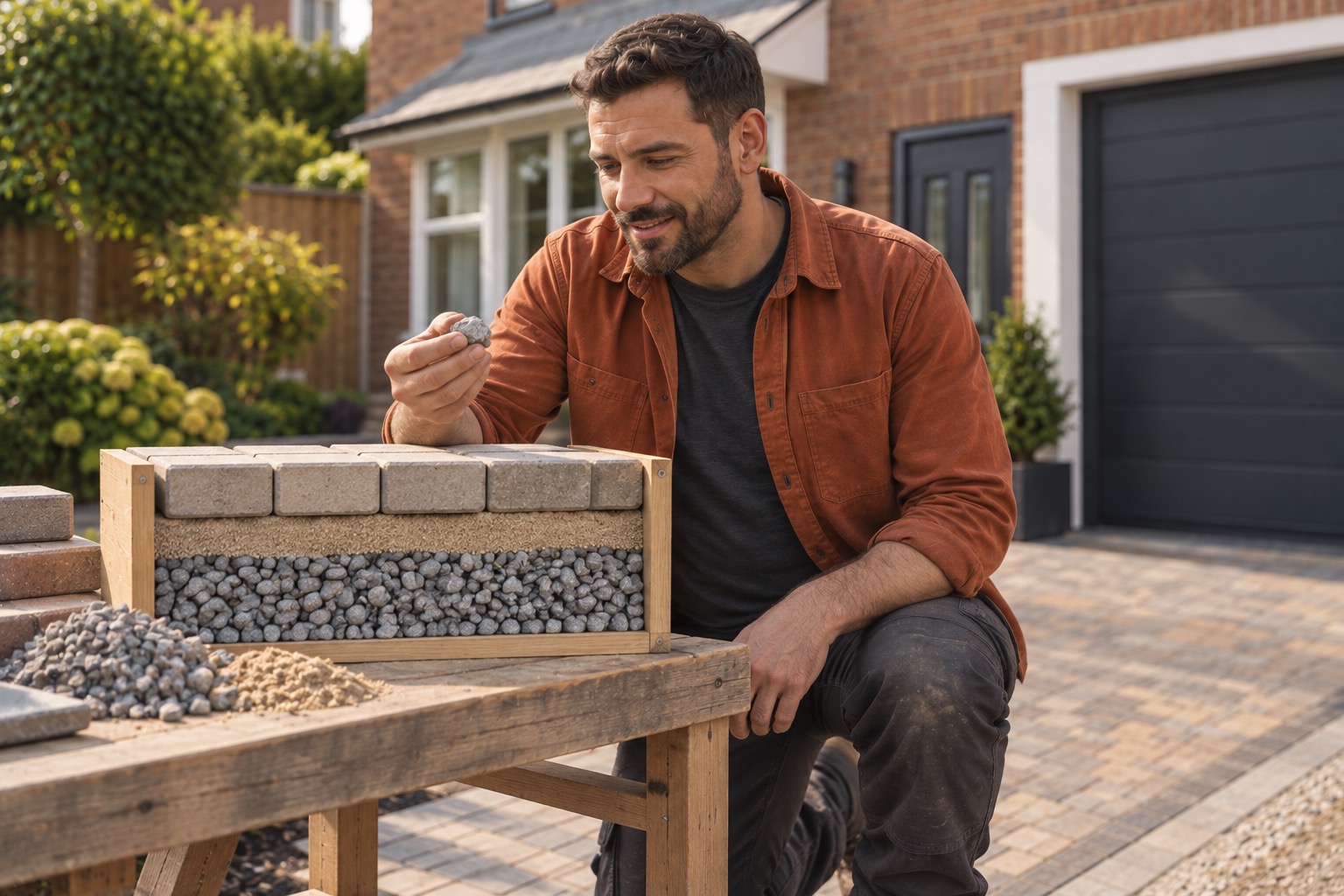
Calculate the in-place volume
Multiply the excavation area by the depth in metres. Where depths differ, calculate named sections separately and add them. The result describes the volume before excavation, not necessarily the loose volume to transport.
Worked example with two sections
A 40 m² section excavated to an example depth of 0.20 m gives 8 m³. A separate 10 m² section at 0.10 m gives 1 m³. Together they give 9 m³ in place. These depths demonstrate arithmetic and are not construction recommendations.
Separate loose volume and mass
Disturbed material may occupy a different volume from material in place. Its mass also depends on composition and condition. Obtain appropriate assumptions from the haulage or disposal provider. Do not apply an unexplained universal bulking factor or convert cubic metres to tonnes without a suitable density.
Plan disposal with the provider
Describe the expected materials, access, loading method and collection arrangements. Ask the provider to confirm capacity, weight restrictions, accepted materials and any required documentation. A vehicle or container’s volume alone does not establish the permissible load.
Record uncertainty before pricing
Existing layers and buried conditions may be uncertain before investigation. Keep measured facts, assumptions and additional-work procedures distinct. Before excavation, follow an appropriate service-location and safe-working process; this volume guide is not an excavation method statement.
For the next part of the quantity schedule, read our guide to paving layers and sub-base. You can also see the complete guide library.
Use your browser’s Print option if you want a paper copy or PDF checklist.
Source: HSE guidance on avoiding underground services.
Read next

Materials
How to calculate asphalt tonnage
Calculate asphalt tonnes from area, compacted depth and density, with an 80 m² worked example and ordering allowance checks.
Materials
Paving ordering allowances and waste: how to estimate them
Separate measured area from cutting, handling and ordering allowances, and avoid applying waste twice in a paving estimate.